Reno3 Pro Service Manual -V1

Content
1. Guidance
2. General Repair Information
3. Phone Structure Diagram
4. Disassembly Steps
5. Assembly Steps
6. After-sale calibration
7. Function Test
8. General Cautions
1.Guidance
The purpose of this document is only to guide OPPO technicians to carry out maintenance service to OPPO products. The content shall be keep in confidential, only avail be able to OPPO authorized service centers, and cannot be provided to third parties without authorization. Please follow the regulations and the guidance for maintenance service. For any problems, please contact China HQ in time.
1.1 Warnings
1. Care must be taken on installation in vehicles fitted with electronic engine management systems and ABS (Anti–skid Braking Systems). Under certain fault conditions, emitted RF energy can affect their operation. If necessary, consult the vehicle dealer/manufacturer to determine the immunity of vehicle electronic systems to RF energy.
2. Phones must not be operated in areas likely to contain potentially explosive atmospheres, e.g. petrol stations (service stations), blasting areas etc.
3. Operation of any radio transmitting equipment, including cellular telephones, may interfere with the functionality of inadequately protected medical devices. Consult a physician or the manufacturer of the medical device if you have any questions. Other electronic equipment may also be subject to interference
1.2 Cautions
1. Repair services and calibrations must be undertaken by qualified personnel only.
2. Use only approved components as specified in the parts list.
3. Ensure all components, modules screws and insulators are correctly re-fitted after servicing and alignment.
4. Electrostatic discharge is the main cause of damage to sensitive components of electronic products. Service centers must operate in accordance with OPPO's requirements for ESD protection. Ensure all work is carried out at an ESD workstation and that an ESD wristband is worn.
2.General Repair Information
1.Ensure all work is carried out at an ESD workstation and that an ESD wristband is worn before starting maintenance.
2.Wear ESD gloves to avoid oil stains and fingerprints.
3.Use protective films to protect the display, camera, camera lens to prevent dust and scratches.
4.Use a clean cloth, ESD brush and alcohol (Concentration above 95%) for appearance cleaning. Do not use other items (such as an eraser) for cleaning to prevent the protective layer from being scratched, which may lead to oxidation and corrosion.
5.Faulty welded mechanical parts (except shield cover and shield frame parts) can only be replaced and not repairable.
6.Use accessories provided by OPPO.
7.Check the contacts or solder joints of devices that may cause simple faults (e.g. soldered interfaces or switches). Re-weld if necessary (only for service centers where lead-free soldering is available) and clean the flux remaining after soldering.
8.Use the equipment provided by OPPO to test the phone (e.g. When the charging function of the device is abnormal, do use the original OPPO adapter to test to ensure the accuracy of the test results).
9.Fill in the fault phenomenon code and fault reason code according to the actual situation, and accurately enter the replacement material code in the CRM system.
10.For more information about products,
Mainland China please visit:
http://172.16.41.122:8888/kbaseui-dev/main.do
Regions except for Mainland China please visit:
ftp://ftpex.oppo.com:919/ or
https://oppo knowledge.custhelp.com/app/home/loc/zh_CN
3. Phone Structure Diagram
3.1 Product Appearance
As shown in Figure 3-1-1
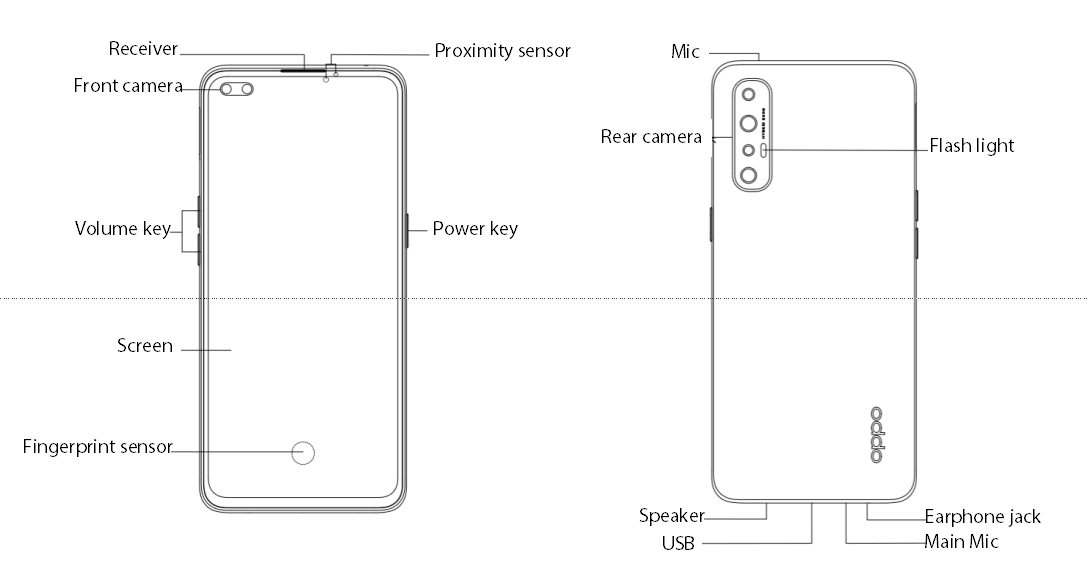
3-1-1
3.2 Phone Structure Explosive View
As shown in Figure 3-2-1
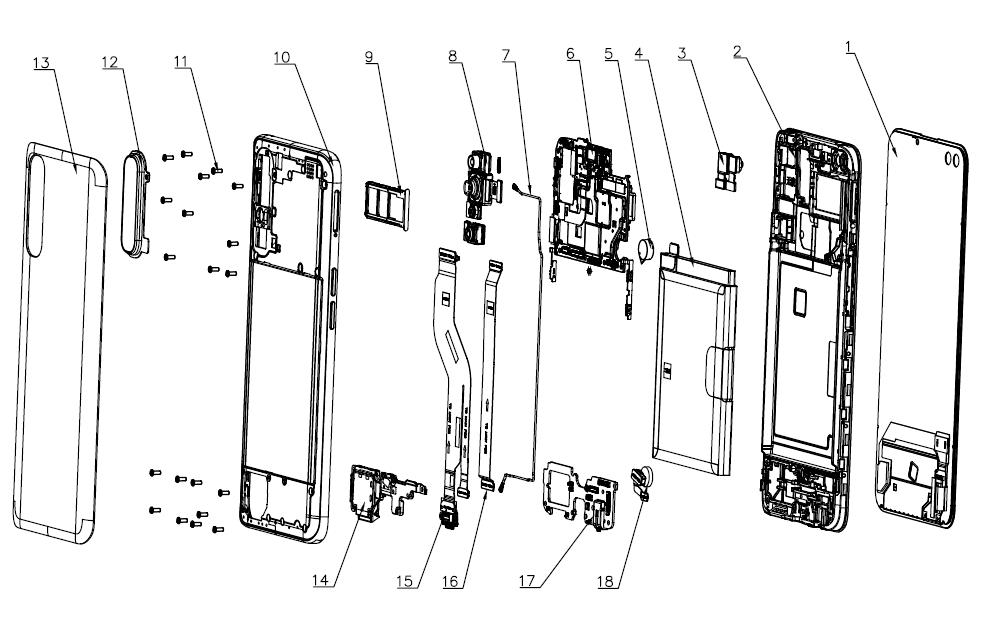
3-2-1
3.3 Explosive Map BOM
| No. | Material Name(After-sales) | Physical Figure | Sub material | QTY | Unit |
| 1 | Screen | 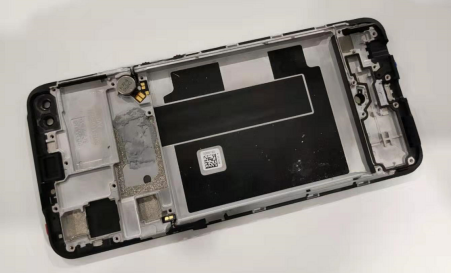 |
(1)OLED Display Screen | 1 | PCS |
| (2)Middle Frame | 1 | PCS | |||
| (5)Vibration Motor | 1 | PCS | |||
| 2 | Mainboard | 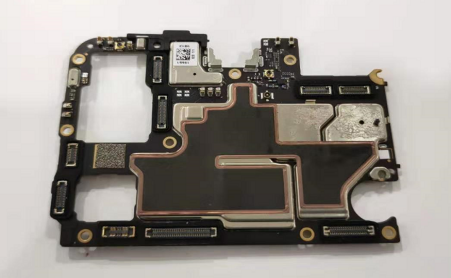 |
Test point PET sheet 1 | 1 | PCS |
| Test point PET sheet 2 | 1 | PCS | |||
| (6)PCB semi-finished | 1 | PCS | |||
| Waterproof paste | 1 | PCS | |||
| Main board bracket(small) | 1 | PCS | |||
| 3 | Mainboard Cover | 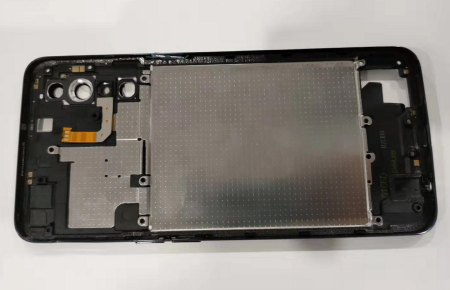 |
(10)Mainboard Cover | 1 | PCS |
| Camera Lens | 1 | PCS | |||
| FPC semi-finished | 1 | PCS | |||
| 4 | Front camera | 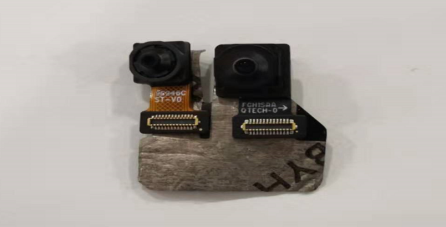 |
(3)Front camera | 1 | PCS |
| Copper foil graphite sheet | 1 | PCS | |||
| 5 | Rear main camera | 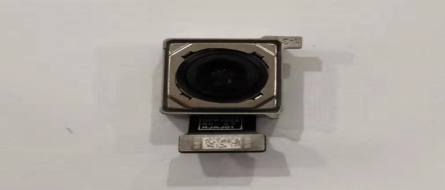 |
(8)Rear main camera | 1 | PCS |
| Rear camera conductive cloth 2 | 1 | PCS | |||
| 6 | Rear wide angle camera | 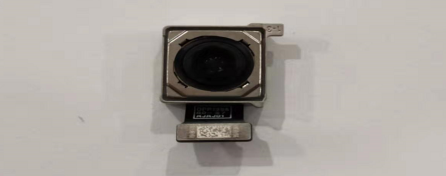 |
(8)Rear wide angle camera | 1 | PCS |
| Rear camera conductive cloth 3 | 1 | PCS | |||
| 7 | Rear telephoto camera 件 | 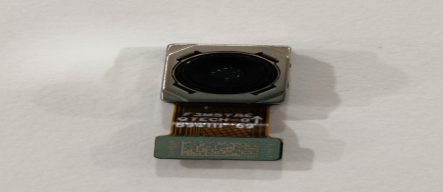 |
(8)Rear telephoto camera | 1 | PCS |
| Rear camera conductive cloth 3 | 1 | PCS | |||
| 8 | USB | 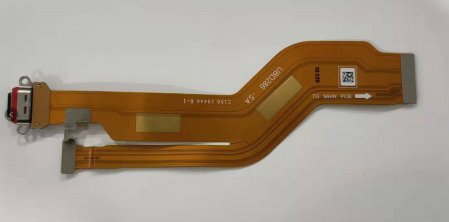 |
USBconductive cloth | 1 | PCS |
| (15)USB | 1 | PCS | |||
| 9 | Fingerprint sensor | 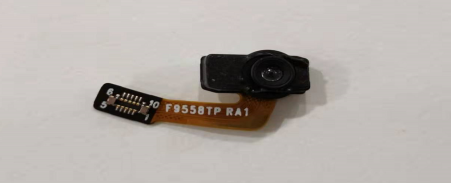 |
Fingerprint sensor | 1 | PCS |
| Fingerprint module foam adhesive | 1 | PCS | |||
| 10 | RF cable | 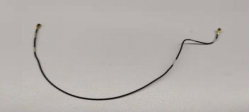 |
(7)RF cable | 1 | PCS |
| 11 | SIM bracket | 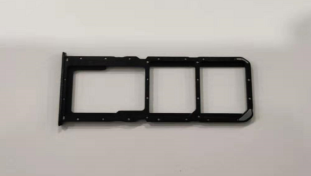 |
(9)SIM bracket | 1 | PCS |
| 12 | Copper foil graphite sheet for front camera | 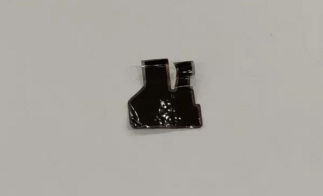 |
Copper foil graphite sheet for front camera | 1 | PCS |
| 13 | FPC semi-finished product | 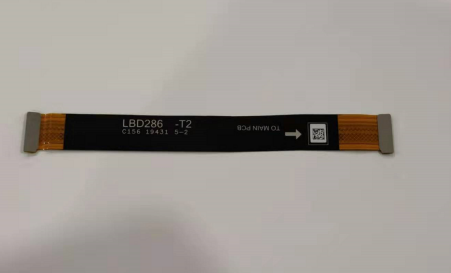 |
(16)LBD286 | 1 | PCS |
| 14 | Speaker-BOX | 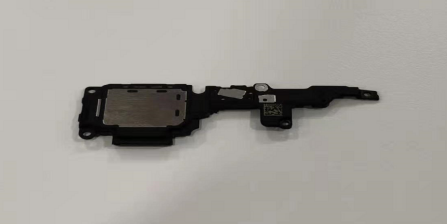 |
(14)Speaker-BOX | 1 | PCS |
| 15 | PCB semi-finished product | 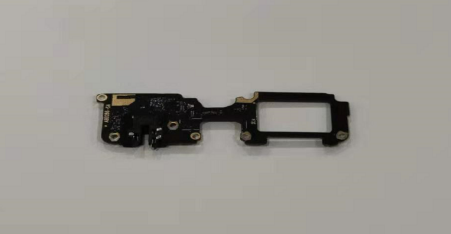 |
(17)Antenna board | 1 | PCS |
| 16 | Back cover | 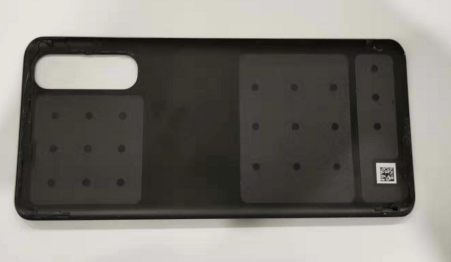 |
(13)Back cover | 1 | PCS |
4. Disassembly Steps
4.1 Disassembly Tools
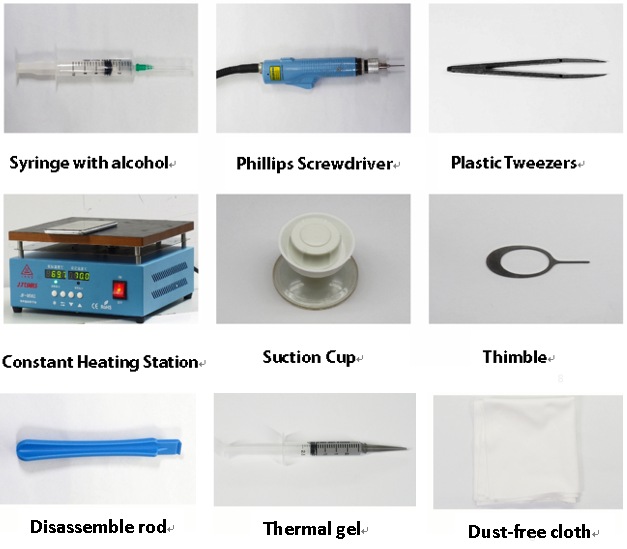
4.2 Preparation
1. The phone must be powered off before disassembly.2. Way to Power Off:
System Power Off: Press the power key then slide to power off.
Forced Power Off: Long press the volume “+” key and power key for about 8 seconds until the display is off.
4.3 Disassembly Steps
| Step | Content | Figure | Cautions |
| 1 | Remove the SIM bracket | 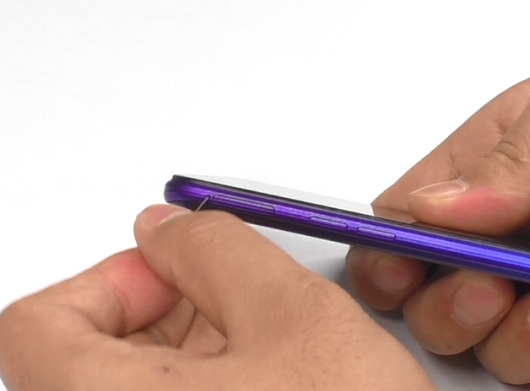 |
Don't scratch the device |
| 2 | Disassemble the battery cover | 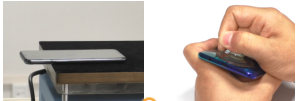 |
|
| 3 | Disassemble Mainboard Cover | 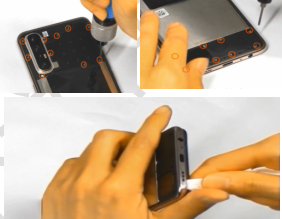 |
(1)The disassembly rod needs to be wrapped with a dust-free cloth to avoid scratching the mainboard cover |
| 4 | Release BTB connectors | 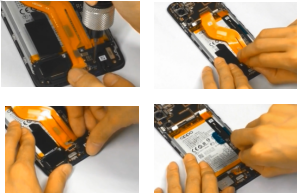 |
The first step is to release battery BTB. |
| 5 | Disassemble the battery | 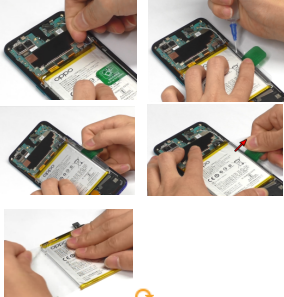 |
|
| 6 | Remove the rear cameras | 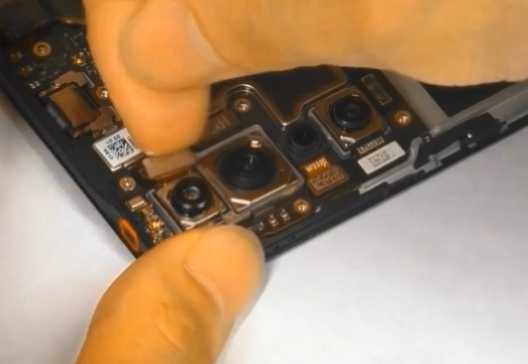 |
Copper foil graphite sheet need to be changed |
| 7 | Remove the rear cameras | 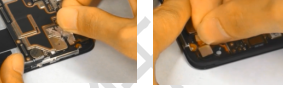 |
Pay attention to the disassembly angle and strength |
| 8 | Remove the mainboard | 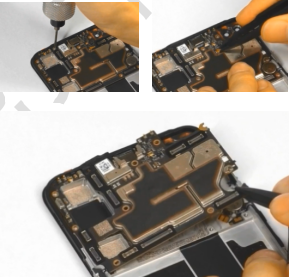 |
Pay attention to the disassembly angle and strength |
| 9 | Remove the motor and receiver | 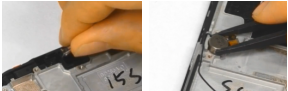 |
/ |
| 10 | Disassemble the FPC of volume key and power key | 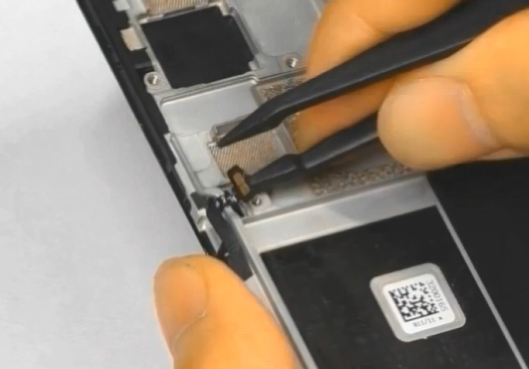 |
/ |
| 11 | Disassemble fingerprint sensor and antenna board | 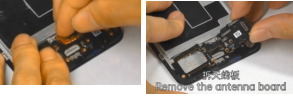 |
/ |
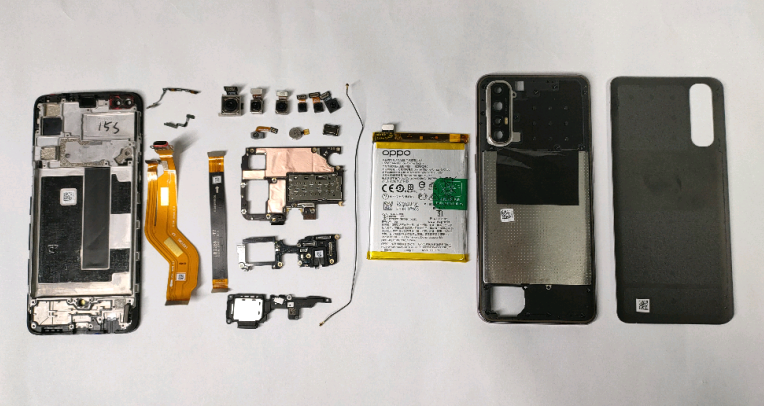
Figure 4.3 All Materials of the Phone
5. Assembly Steps
5.1 Bill of Must-Be-Replaced Materials
| No. | Code | Material | SPEC. | QTY | Remark |
| 1 | 4879647 | Battery cover double side adhesive | BD285 | 1 | Must be replaced after disassembling |
| 2 | 4879700 | Copper foil graphite sheet for front camera | BD285 single-sided adhesive | 1 | Must be replaced after disassembling |
| 3 | 4879634 | Camera Decorative parts foam | BD285 single-sided adhesive | 1 | Must be replaced after disassembling |
| 4 | 4875006 | Battery pull tape | BLP681 transparent | 1 | Must be replaced after disassembling the battery |
| 5 | 5181653 | Battery extracting sticker | common right green | 1 | Must be replaced after disassembling the battery |
5.2 Assembly Steps
| No. | Content | Picture | Notes |
| 1 | Install Vibration motor, Receiver, Volume/Power FPC | 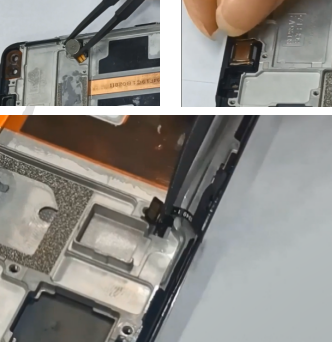 |
Don’t reverse the receiver |
| 2 | Thermally conductive gel | 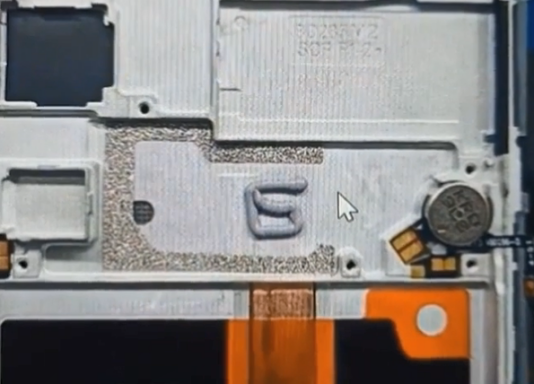 |
/ |
| 3 | Install mainboard, cameras | 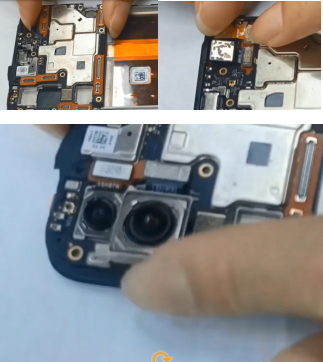 |
Avoid opening holes for ash (if you enter the ash, please use air blowing, do not use a brush) |
| 4 | Install battery | 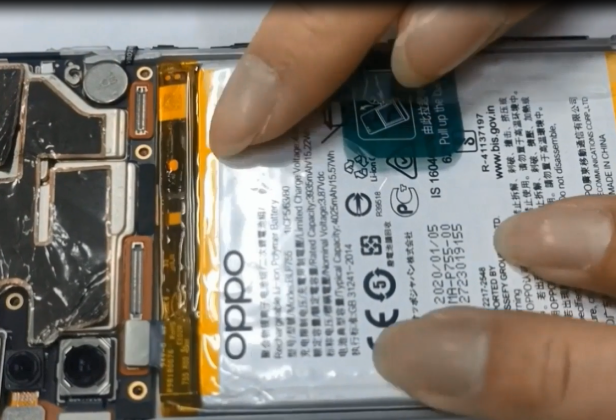 |
Easy-to-tear paper should be changed |
| 5 | Install antenna board, RF cable | 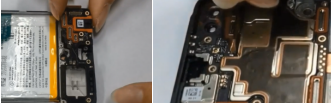 |
/s |
| 6 | Install fingerprint sensor | 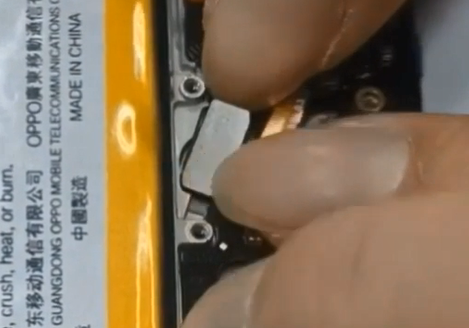 |
/ |
| 7 | Install USB、LBD | 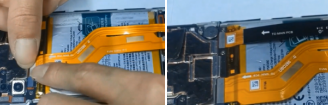 |
USB needs to be installed above the speaker |
| 8 | Install speaker | 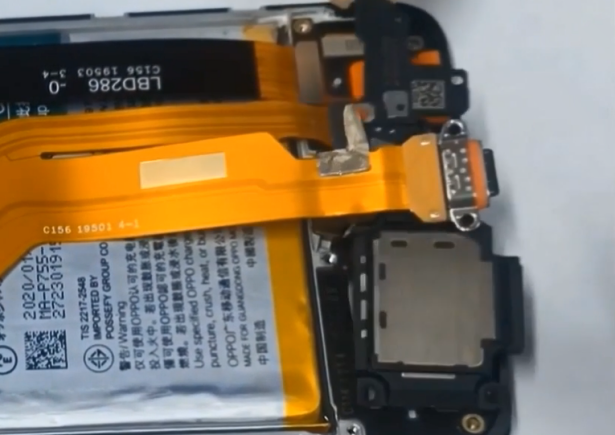 |
/ |
| 9 | Fix mainboard,USB | 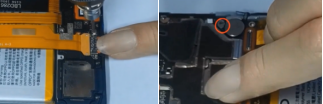 |
/ |
| 10 | Install middle frame & card tray | 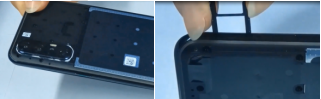 |
Flat the graphite on the speaker |
| 11 | Install back cover | 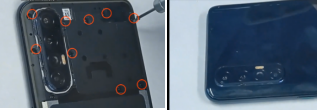 |
/ |
6. After-sale calibration
It must be calibrated after disassembling or replacing the phone, Calibration include Light leakage calibration,Fingerprint optical calibration and Dual Camera Calibration. After the calibration is completed, the phone needs to be restarted.
6.1 Leak Calibration
6.1.1 Calibration Scenario
The following fingerprint calibration must be performed after disassembling or replacing any of the main board, screen cover assembly or re-assemble after disassembling the whole machine
6.1.2 Calibration Tool
As shown in Figure 6.1.2 (Air bag for loading after sales materials)
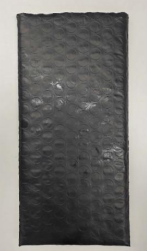
Figure 6.1.2
6.1.3 Calibration Method
Calibration path: Enter *#899# in the dial interface>Aftersales Devices Calibration> Enter password “6776” >Infrared Proximity Calibration > Leak Calibration,Specific operations refer to calibration page hints:Put the upper part of the phone into the air bag to expose the “Light Leakage Calibration” button. After the upper part is blocked by the air bag, click “Light Leak Calibration” and the phone will automatically calibrate. After the calibration is completed, it will automatically jump to the next fingerprint calibration item.
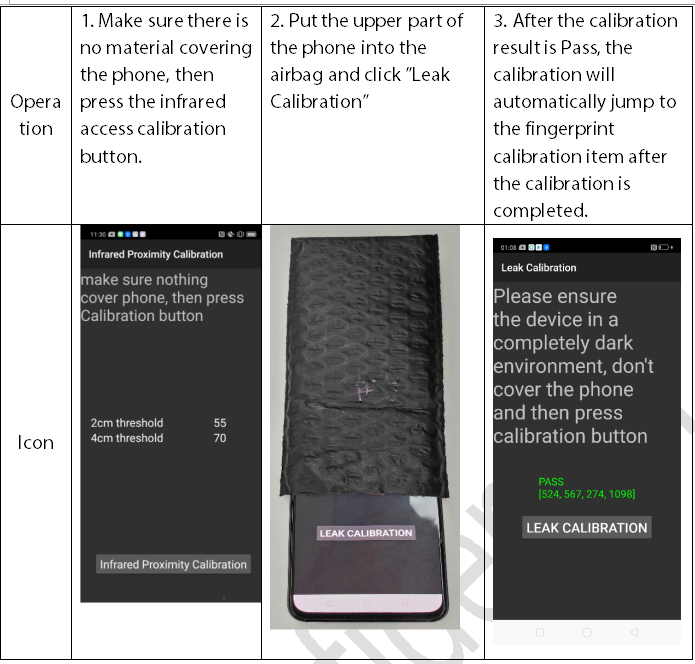
6.2 Fingerprint optical calibration
6.2.1 Calibration Scenario
The following fingerprint calibration must be performed after disassembling or replacing any of the main board, fingerprint module, protective film, and screen cover assembly.
6.2.2 Calibration Tool
The calibration tool is shown in Figure 6.2.2-1: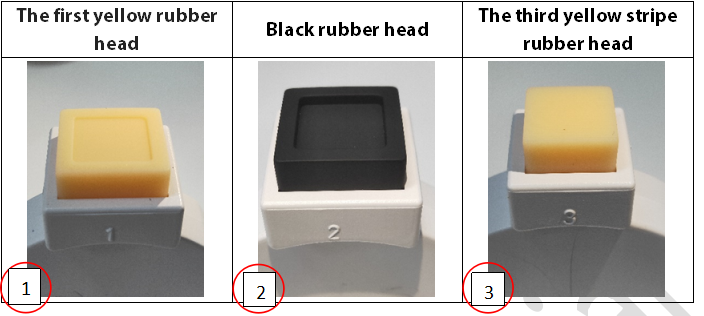
Figure 6.2.2-1
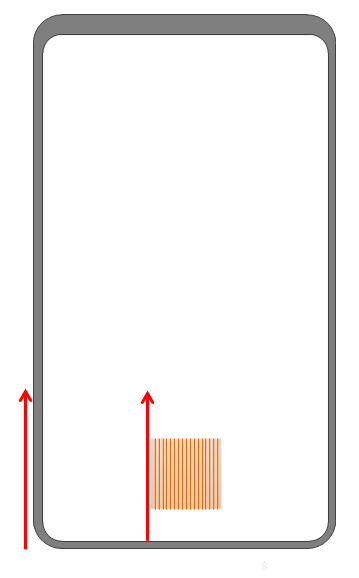
As shown in the Figure 6.2.2-2, the yellow stripe rubber head is with parallel stripes.
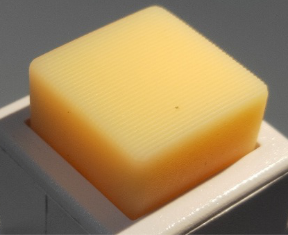
Figure 6.2.2-2
The schematic diagram during measure is shown in Figure 6.2.2-3:
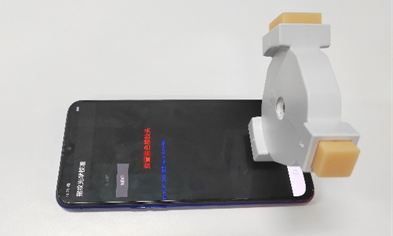
Figure 6.2.2-3
6.2.3 Calibration Method
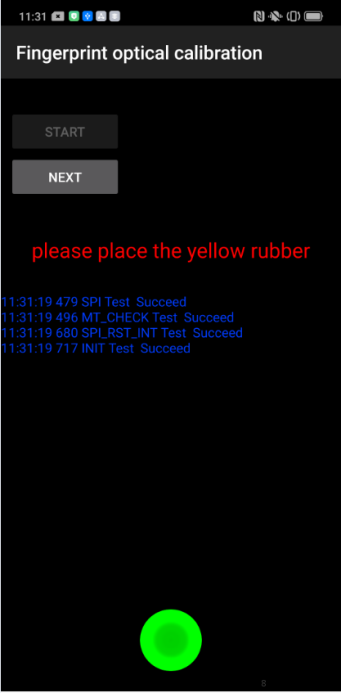
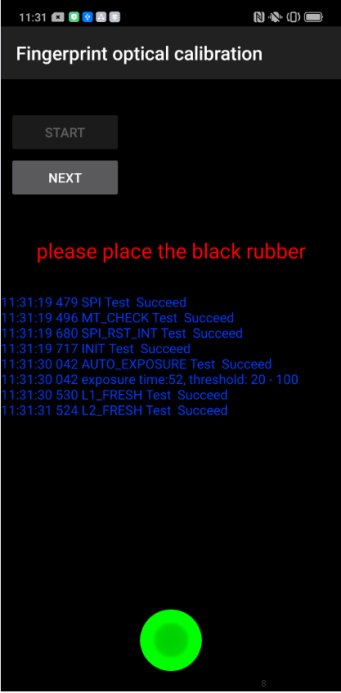
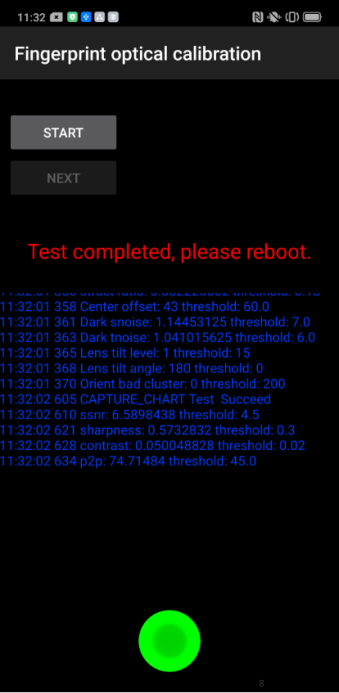
After the light Leak Calibration is completed, it will automatically jump to the fingerprint calibration item. Specific operations refer to calibration page hints:
| Operation | 1. Click "START" to start calibration after it jumps into the fingerprint optical calibration, | 2. According to the prompt "please place the yellow rubber ", put the yellow rubber on the fingerprint spot area (the groove is facing down), and click "NEXT" until it prompts " please place the black rubber". |
3.According to the prompt "please place the black rubber head", put the black rubber on the fingerprint spot area (the groove is facing down), click "NEXT" until the "please place the yellow stripe rubber " prompts to remove the black rubber ; |
|---|---|---|---|
| Icon | 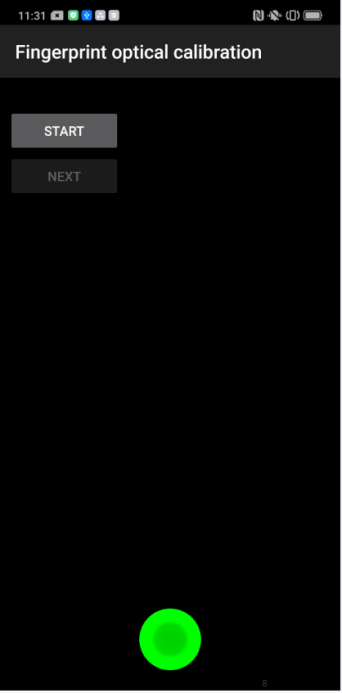 |
 |
 |
| Operation | 4. According to the prompt “Please place the yellow- striped rubber”, put the yellow stripe rubber (striped down) in the spot area, click “NEXT”; | 5. Prompt “Test completed, please reboot”, remove the yellow stripe rubber and complete the test; If the prompt is fail, check if there is a problem with the fingerprint module installation and recalibrate the test. |
Note: The stripe direction of the yellow stripe rubber should follow the long side of the phone. After the calibration is completed, the phone needs to be restarted |
| Icon | 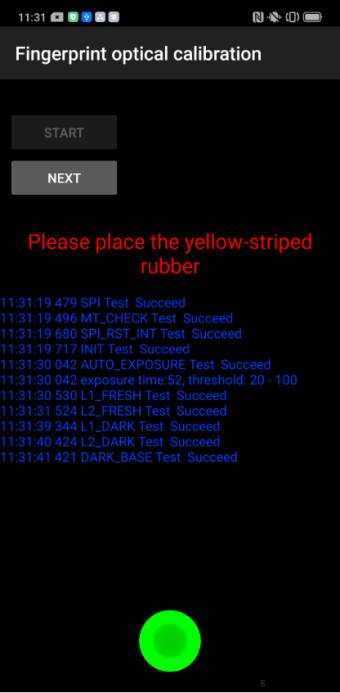 |
 |
 |
6.3 Dual Camera Calibration
6.3.1 Calibration Scenario
1. When the portrait mode is poorly blurred, the after-sales service center needs to calibrate the phone.2. All devices must be calibrated after the phone has disassembled, or the portrait mode will be poorly blurred.
6.3.2 Calibration Tool
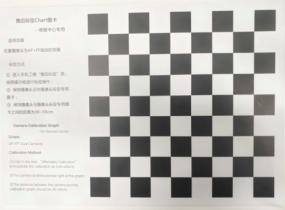
After-sales calibration Chart,As shown in Figure 6.3.2-1:
6.3.3 Calibration Method
1. 1. Please align the yellow box with the edge of the chart, and then take a Photo. Then, do not operate the phone when the phone enters the computing interface until it displays “Pass” with the calibration completed.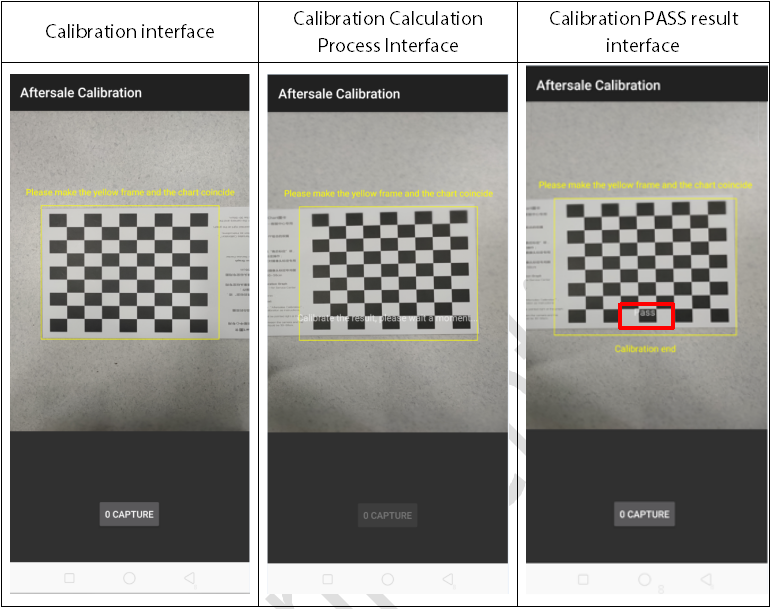
Precautions:
1. If it shows “Fail 69” during calibration, the lens is too far from the chart;
2. If it shows “Fail 70” during calibration, the lens is not parallel to the chart;
3. If it shows “Fail 68” during calibration, the lens is too close from the chart;
7. Function Test
7.1 Test Path
Dialing Interface>Enter*#899#>Enter automatic test; The "Confirm" dialog box will pop up after the test complete, if there is no problem choose “Pass”, otherwise choose “Fail”.
7.2 Test Requirements
| No. | Test Items | Test Requirements |
| 1 | LCD Test | Observe the red, green, blue, white, black, gray, grayscale and color interface successively; If there are black spots, bright spots and other anomalies, the function is good; |
| 2 | Vibration Test | Get ear close to check the vibration from the motor for 3 seconds. If the motor vibrates normally(No noises or weak vibration), the function is good; |
| 3 | Touch Screen Auto Test | If the interface shows “PASS” and jumps to the next test, the function is good; |
| 4 | Front Camera Preview | Align the rear camera with a white surface and a black surface. If there is no black dot, black line or blurred screen on the screen after aligning the white surface, and there is no bright spot on the screen after aligning the black surface, the camera is good; |
| 5 | Rear camera preview | Align the rear camera with a white surface, a black surface, and a surface with text. If there is no black dot, black line or blurred screen on the screen after aligning the white surface, there is no bright spot on the screen after aligning the black surface, white point or blurred screen, the camera is good; |
| 6 | Second rear camera preview | Align the rear camera with a white surface, a black surface, and a surface with text. If there is no black dot, black line or blurred screen on the screen after aligning the white surface, there is no bright spot on the screen after aligning the black surface, white point or blurred screen, the camera is good; |
| 7 | Rear third camera preview | Check if it can open normally, enter camera preview for 5 seconds |
| 8 | Rear fourth camera preview | Check if it can open normally, enter camera preview for 5 seconds |
| 9 | Echo test | Testing Main MIC: Blow the air to the MIC hole on the bottom of the phone. If the receiver (earphone) sounds, the function of Main MIC is good; Testing Sub MIC: Blow the air to the sub MIC hole on the top of the phone. If the speaker sounds, the function of Main MIC is good; |
| 10 | Flashlight Test | Open the flashlight. If it can be opened normally with color deviations, the function is good; |
| 11 | Charging Test(VOOC) | Use the original OPPO adapter and USB cable to charge. If the interface shows “PASS” and jumps to the next test, the function is good; |
| 12 | Headset in-out Plug test | Plug in and out the earphone with the OPPO earphone. If the interface shows “PASS” and jumps to the next test, the function is good; |
| 13 | Sensor Self-test and Calibration | When the phone enters into the Sensor self-calibration interface, the phone must be placed on the desk flatly. Then click the first calibration item. After the test is passed, it will automatically jump to the next test item; |
| 14 | Gyroscope Test | Take the mobile phone to draw the "8" word graphic. If the interface shows “PASS” and jumps to the next test, the function is good; |
| 15 | M-Sensor Test | Shake the phone from the left to the right side. If the interface shows “PASS” and jumps to the next test, the function is good; |
| 16 | Proximity-sensor Test(100mA) | Use the palm to cover the light sensor hole, and the screen will turn green from black. If the interface shows “PASS” and jumps to the next test, the function is good; |
| 17 | Keypad Test | Press the power key and volume key one by one. If keys can be pressed normally and the interface jumps to the next test, the function is good; |
| 18 | Fingerprint Auto Test | If the interface shows “PASS” and jumps to the next test, the function is good; |
| 19 | Media test | Click the “20-4K(-3db)signal” to test the sound of the media function for 5s. If there is no silence, weak sound, noises, and breaking sound, the interface shows “PASS” and jumps to the next test, the function is good; |
| 20 | Call test | If the phone has been installed with the operator's SIM card, dial the corresponding operator's phone number. If no card is installed, call the 112 to test (Calling the Operator is recommended). If the call can be performed normally and the receiver is without noises or weak sounds, the function is good; |
After the above 20 items are tested, they will prompt to the test result interface. If the test PASS, project will show “√”; If the test FAIL, project will show “×” as shown below.
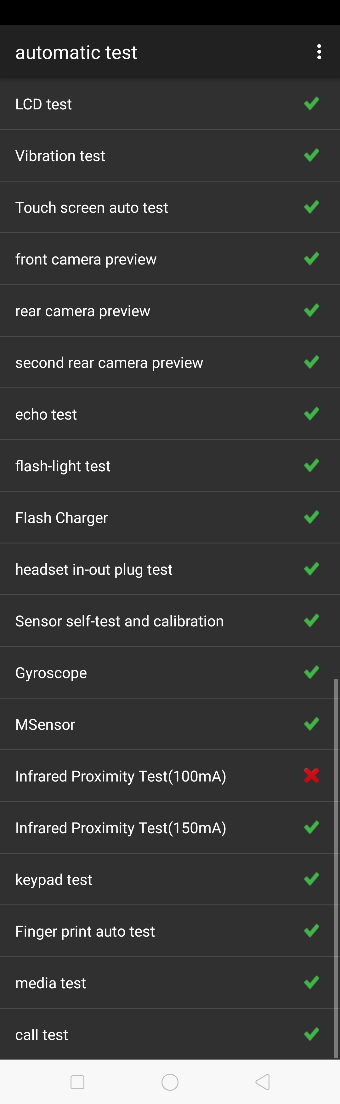
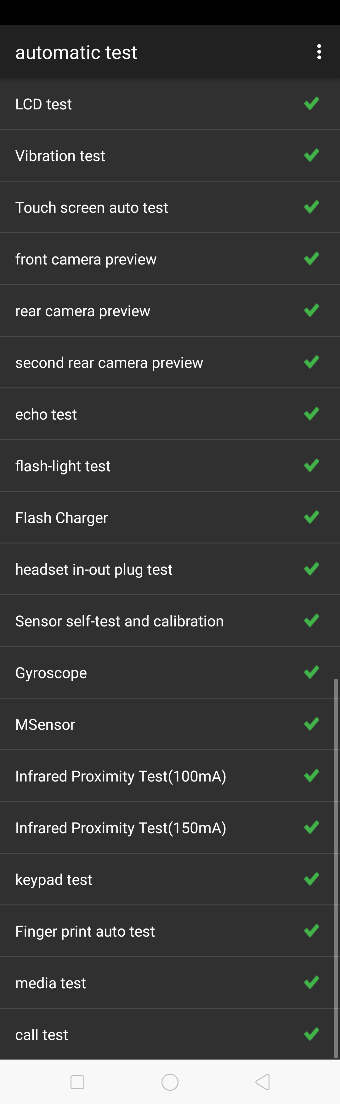
Figure 7-1 Figure 7-1
8. General Cautions
8.1 Calibrate the front camera & rear camera after installation;8.2 When disassembling (front/rear) camera and fingerprint module, pay attention to protect the camera lens with low mucosa;
8.3 If it involves replacing the screen assembly, the main board or cleaning the original thermal gel, it is necessary to apply tShe thermal conductive gel according to the above installation steps;
8.4 For OPPO Reno3 Pro Disassembly Video Please visit:
FTP: Overseas Customer Service--- OPPO Technical Service--- Product Material---Reno3 Pro CPH(2035、2036、2037).
| Version | Date | Draft | Review | Approve | Modified content |
| V1.0 | 2020-02-05 | Jimi | Lin binbin |
Huang guoxin |
1.First Edition |
Sponsored Deals
Advertisement · Hand-picked offers, refreshed regularly
These are paid/affiliate advertisements from our partner store and are not related to OPPO or OPPO spare parts.
Related Articles
Sponsored Deals
Advertisement · Hand-picked offers, refreshed regularly
These are paid/affiliate advertisements from our partner store and are not related to OPPO or OPPO spare parts.